U.S. Senators Reintroduce Bipartisan AI Innovation Bill to Strengthen American Leadership
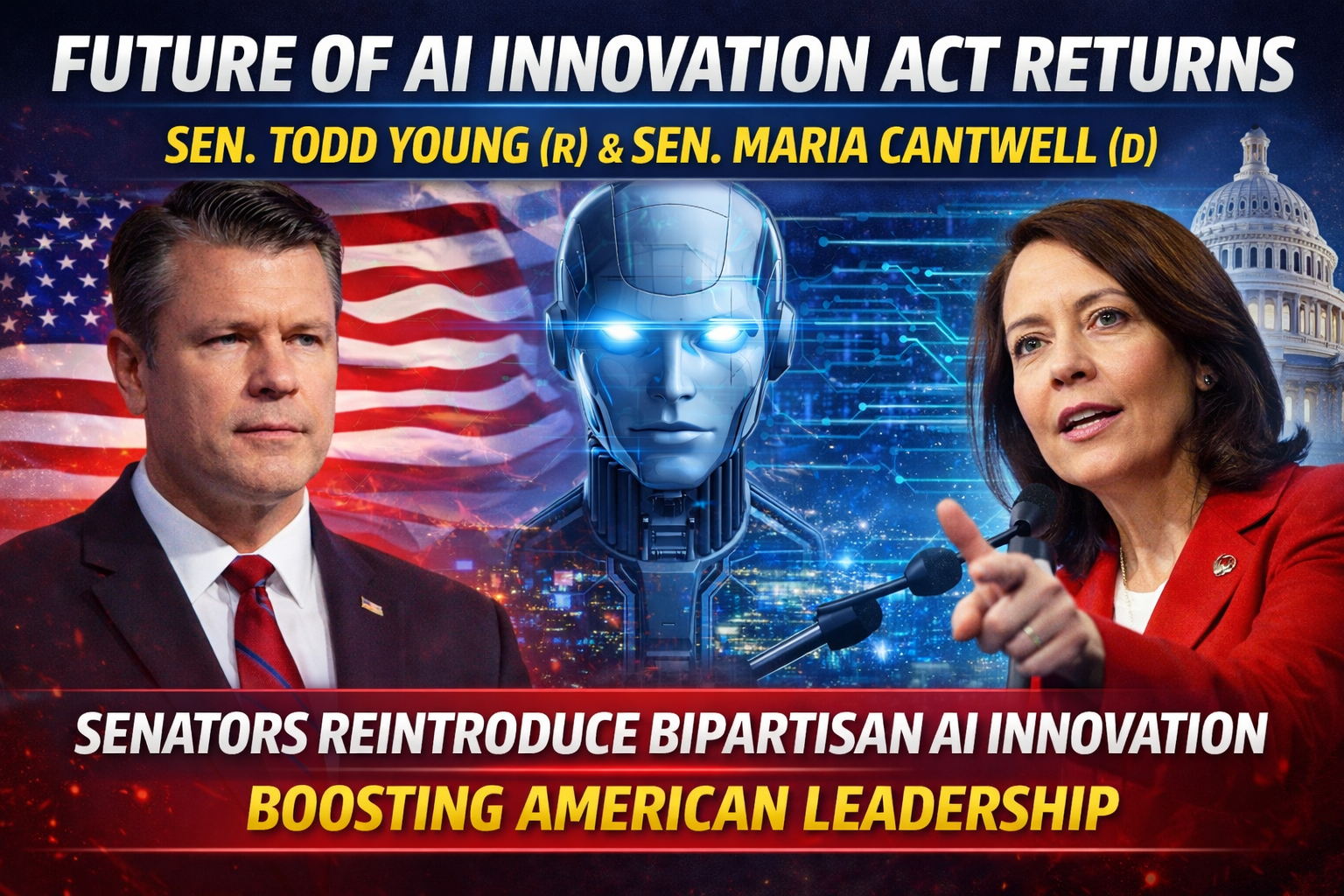
In a move aimed at strengthening the United States’ position in the global artificial intelligence race, a bipartisan group of U.S. senators has reintroduced major AI legislation known as the Future of AI Innovation Act.
The bill was brought forward by Republican Senator Todd Young of Indiana and Democratic Senator Maria Cantwell of Washington, marking a rare moment of cross-party cooperation in technology policy. The initiative reflects growing concern among lawmakers about maintaining America’s competitiveness in advanced technologies such as artificial intelligence, robotics, and quantum computing.
What the Future of AI Innovation Act Proposes
The legislation is designed to establish a structured framework that strengthens U.S. technological leadership while guiding the ethical and responsible development of AI systems.
At the center of the bill is the proposed creation of a new federal entity called the Center for AI Standards and Innovation. This body would collaborate with leaders from industry, academic institutions, and civil society to develop voluntary technical standards, performance benchmarks, and transparency guidelines for the AI ecosystem.
Supporters argue that this collaborative model will promote innovation while reducing risks associated with fragmented or unregulated AI development.
AI Testbeds at National Laboratories
Another major component of the bill is the establishment of specialized AI “testbeds” within U.S. national laboratories.
These facilities would serve as hubs for experimentation and research in emerging technologies closely connected to AI, including:
- Quantum computing
- Advanced robotics
- High-performance computing systems
- Next-generation data infrastructure
By leveraging the expertise and infrastructure of national labs, proponents believe the United States can accelerate innovation and ensure its researchers remain at the forefront of global technological advancement.
Bipartisan Support and Strategic Goals
Senator Todd Young emphasized that the future of AI development must reflect core American values, stating that innovation should strengthen democratic principles while enhancing economic competitiveness.
Senator Maria Cantwell echoed this sentiment, noting that as foreign competitors increase investments in next-generation technologies, the United States must maintain its strategic advantage through thoughtful public policy and close collaboration with the private sector.
The bipartisan nature of the bill signals growing consensus that AI governance is not solely a partisan issue, but a matter of national strategic importance.
Industry Reaction and Strategic Importance
Industry leaders have broadly welcomed the renewed legislative effort, viewing it as a constructive step toward clearer federal direction in AI policy.
Major technology companies have repeatedly called for cohesive standards and strategic guidance to help balance rapid innovation with public safety, privacy protections, and ethical oversight. Many see the Future of AI Innovation Act as a framework capable of reducing fragmentation while fostering responsible growth.
Artificial intelligence has already transformed sectors including healthcare, transportation, finance, manufacturing, and national security. As adoption accelerates, the need for structured governance becomes increasingly urgent.
What Comes Next
As the bill advances through Congress, debates are expected over funding allocations, implementation details, and the role of private-sector and academic stakeholders in shaping standards.
Critics caution that without coordinated national action, unclear guidelines could erode public trust, create safety risks, or allow foreign competitors to surpass U.S. capabilities.
If enacted, the Future of AI Innovation Act could represent a defining moment in establishing a long-term national strategy for artificial intelligence — one that seeks to preserve U.S. leadership while aligning innovation with democratic values and economic stability.